The middle finger emoji meaning is usually connected to anger, defiance, disrespect, or telling someone to “get lost.” 🖕 is a digital version of the offensive middle-finger hand gesture, so it can carry a strong negative tone. However, its meaning can change depending on the conversation, relationship, culture, and personality of the person using it.
In texting and social media, people do not always use 🖕 seriously. Close friends may send it as a joke, while someone in an argument may use it to show genuine anger. Because the gesture is widely recognized as rude or offensive, the context matters a lot.
This guide explains what 🖕 means in texts, friendships, relationships, social media, and different situations. It also covers what it can mean when a girl, guy, crush, friend, or partner sends it and how you can respond.
What Is the Middle Finger Emoji 🖕?
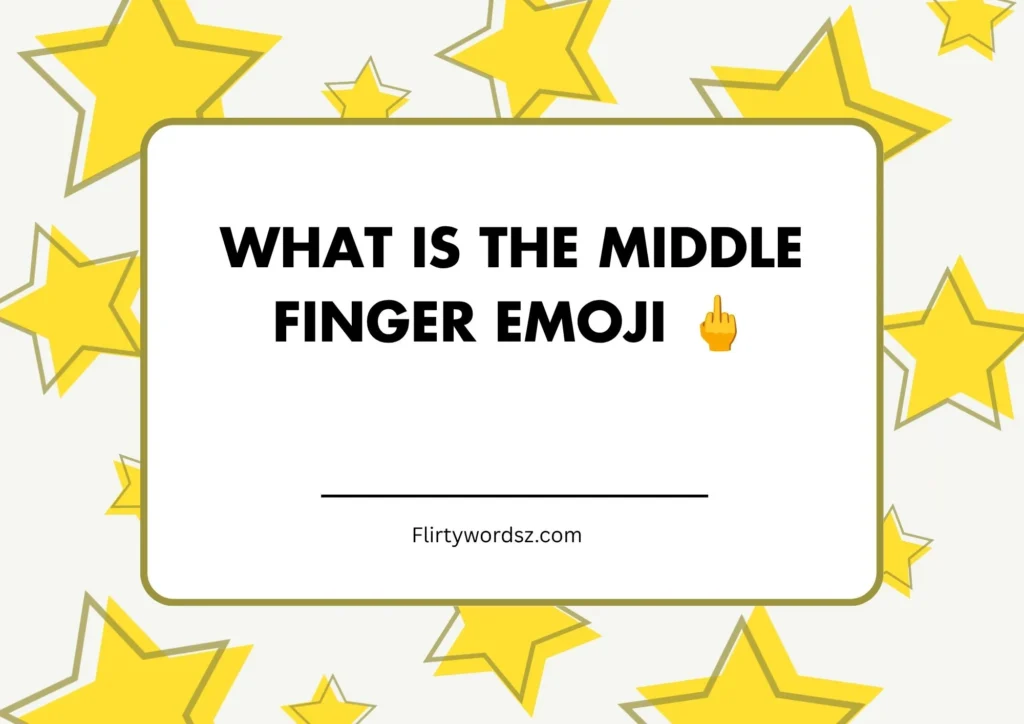
The 🖕 emoji is officially associated with the middle-finger hand gesture. It shows a raised middle finger and is commonly used online to express anger, rejection, defiance, annoyance, or an intentionally rude attitude.
The gesture itself has a long history in different cultures, while the emoji provides a digital way to communicate that gesture through messages, comments, posts, and other online conversations.
The exact emotional strength can vary. Someone might use 🖕 after a serious disagreement, but another person might send it to a close friend while joking around.
Quick Meaning of 🖕
| Situation | Possible meaning |
| Argument | Anger, disrespect, hostility |
| Close friendship | Playful insult or joking |
| Social media | Defiance, frustration, attitude |
| Romantic relationship | Anger, teasing, or rejection |
| Casual chat | “Whatever,” “get lost,” or annoyance |
| Joke | Playful rudeness |
| Serious conflict | Strong insult or hostility |
The emoji should generally be treated as rude or aggressive unless the surrounding conversation clearly shows that it is being used playfully.
Middle Finger Emoji Meaning in Text Messages
In text messages, 🖕 often communicates an emotion that would normally be expressed through body language.
For example, if someone says:
“You seriously did that? 🖕”
the emoji can emphasize anger or frustration.
But if a close friend says:
“You forgot my birthday again 😂🖕”
the same emoji may be playful rather than genuinely hostile.
Texting removes facial expressions, voice tone, and body language. Because of that, emojis can become important clues about someone’s intended tone.
Common meanings in texting include:
- “Get lost.”
- “Leave me alone.”
- “I’m angry.”
- “I don’t care.”
- “Whatever.”
- “I strongly disagree.”
- “You annoyed me.”
- “I’m jokingly insulting you.”
- “I’m being rebellious.”
- “I’m giving you attitude.”
The surrounding words are usually more important than the emoji by itself.
What Does 🖕 Mean on Social Media?
On social media, the middle finger emoji can express frustration, rebellion, sarcasm, or a strong reaction to something.
Someone may use 🖕 in a caption after having a bad day, during an online argument, or as part of a humorous post.
For example:
“Monday can seriously go away 🖕😂”
Here, the emoji may express frustration in a humorous way.
Another person might post:
“I don’t care what anyone thinks 🖕”
In this context, it can communicate defiance or an unwillingness to follow other people’s opinions.
The meaning can also depend on the type of post. A serious complaint and a funny meme can use the same emoji while communicating completely different emotions.
🖕 Meaning in Friendship
Among friends, the middle finger emoji can sometimes be surprisingly casual.
Close friends often use exaggerated insults, teasing, and rude-looking emojis without actually intending harm. The emoji can become part of their normal communication style.
For example:
Friend: “You ate the last slice of pizza.”
You: “You were too slow 🖕😂”
This probably does not mean genuine hatred. The laughing emoji and friendly context make the message more playful.
However, friendship does not automatically make 🖕 harmless. If two friends are already arguing, the same emoji could signal genuine anger.
Playful friendship meaning
Among close friends, 🖕 may mean:
- “You idiot 😂”
- “Nice try.”
- “You’re annoying.”
- “I can’t believe you.”
- “You’re ridiculous.”
- “I’m teasing you.”
The relationship and previous communication style are important clues.
🖕 Meaning in Romantic Relationships
The middle finger emoji can have several meanings between romantic partners.
During a serious argument, it can express anger or disrespect. During playful conversation, however, it may simply be teasing.
For example:
Partner: “You are not getting any of my fries.”
You: “Fine 🖕😂”
That could be playful.
But:
Partner: “Don’t talk to me anymore.”
You: “🖕”
would likely communicate a much more hostile reaction.
If your partner normally never uses rude emojis and suddenly sends 🖕 during an argument, it may be worth paying attention to the overall tone rather than assuming it is a joke.
🖕 Meaning From a Girl
If a girl sends you 🖕, there is no single meaning that applies to every situation.
She could be:
- joking with you,
- annoyed with you,
- expressing genuine anger,
- teasing you,
- responding sarcastically,
- telling you to stop,
- or deliberately being rude.
If she sends 🖕 with laughing emojis
For example:
“You’re so reckless 😂🖕”
This may be playful teasing, especially if you already joke with each other.
If she sends only 🖕
A single 🖕 without any other context can feel much more direct. Depending on the previous conversation, it may communicate annoyance, rejection, or anger.
Avoid assuming that it has a romantic meaning simply because a girl sent it.
🖕 Meaning From a Guy
A guy may use 🖕 in much the same ways.
Among male friends, it can sometimes be part of casual teasing:
“Bro, you really believed that? 🖕😂”
But it can also be serious:
“Don’t message me again 🖕”
The difference comes from the words, relationship, and situation.
The emoji itself does not tell you whether the person is joking or angry.
🖕 Meaning From a Crush
When your crush sends 🖕, it can be tempting to look for a hidden romantic meaning. Usually, you should focus on the conversation around it instead.
For example:
You: “I know you secretly like my terrible jokes.”
Crush: “Keep dreaming 🖕😂”
That could be playful teasing.
On the other hand:
You: “Why aren’t you replying to me?”
Crush: “🖕”
could indicate irritation.
The emoji alone cannot establish romantic interest.
🖕 Meaning From a Partner
When a boyfriend, girlfriend, spouse, or partner sends 🖕, the meaning depends heavily on the relationship’s communication style.
Some couples jokingly use rude gestures with each other. Other couples may consider the emoji disrespectful.
| Message | Possible interpretation |
| “You stole my blanket 🖕😂” | Playful teasing |
| “Fine, you win 🖕🤣” | Joking frustration |
| “Leave me alone 🖕” | Genuine anger |
| “I don’t want to talk anymore 🖕” | Strong negative emotion |
| “You are impossible 😂🖕” | Could be affectionate teasing |
If you’re unsure, asking directly is often better than trying to decode the emoji alone.
Friendly vs. Negative Meaning of 🖕
One of the biggest reasons people misunderstand this emoji is that it can look identical in friendly and hostile situations.
Consider these two examples:
Example 1:
“Bro, you beat me again 🖕😂”
Example 2:
“Don’t ever contact me again 🖕”
The visual emoji is exactly the same, but the emotional meaning is very different.
Friendly use
A friendly use often includes:
- laughing emojis,
- playful language,
- inside jokes,
- exaggerated insults,
- an established friendship,
- a lighthearted conversation.
Negative use
A negative use may include:
- angry language,
- insults,
- threats to end communication,
- arguments,
- accusations,
- repeated hostile messages.
Always look at the whole message rather than decoding 🖕 in isolation.
Is the Middle Finger Emoji Always Offensive?
No, but it is generally considered a rude or offensive gesture.
The level of offensiveness depends on the culture, relationship, setting, and intent.
A person might consider it funny among close friends but inappropriate in a professional conversation.
For example, sending 🖕 to a close friend in a private joke is different from sending it to a teacher, customer, manager, or stranger.
Even if you personally use it casually, another person may interpret it as disrespectful.
Is 🖕 a Sign of Anger?
It can be.
The emoji is frequently used to communicate anger, irritation, frustration, rejection, or defiance. However, anger is not guaranteed.
Someone may use it humorously or sarcastically.
Look for supporting signals such as:
- angry words,
- repeated insults,
- short replies,
- arguments,
- lack of laughing or playful language,
- statements such as “leave me alone.”
The more serious the surrounding message, the more likely the emoji is intended negatively.
Can 🖕 Be Used as a Joke?
Yes.
People sometimes use the middle finger emoji as exaggerated humor.
For example:
“You finished the whole cake without me? 🖕😂”
The speaker probably isn’t literally expressing hatred. The combination of exaggeration and humor can turn an otherwise offensive gesture into playful teasing.
Still, humor depends on the people involved. A joke between close friends may not work the same way with someone you barely know.
Can 🖕 Mean “I Don’t Care”?
Sometimes.
A person might use 🖕 to express an attitude of:
- “I don’t care.”
- “Do whatever you want.”
- “I don’t need your approval.”
- “Whatever.”
- “I’m doing what I want.”
For example:
“People can say whatever they want. I’m doing my thing 🖕”
Here, the emoji may communicate defiance rather than a direct insult toward one particular person.
Can 🖕 Mean “Get Lost”?
Yes.
In certain conversations, 🖕 can function like a rude version of:
- “Go away.”
- “Get lost.”
- “Leave me alone.”
- “Back off.”
For example:
“Stop bothering me 🖕”
The words make the intention clear.
A standalone 🖕 can sometimes communicate the same idea, although its exact meaning depends on the circumstances.
Middle Finger Emoji Meaning in an Argument
During an argument, 🖕 usually carries a stronger negative tone.
If someone sends it after a disagreement, they may be expressing:
- anger,
- frustration,
- rejection,
- disrespect,
- defiance,
- or a desire to end the conversation.
For example:
“You never listen to me.”
“Because you’re always complaining.”
“Whatever 🖕.”
In this situation, the emoji reinforces the hostile tone.
If you receive it during a heated conversation, responding with another insult may make the situation worse.
How to Respond When Someone Sends 🖕
Your response should depend on who sent it and what happened before.
You do not always need to respond with the same emoji.
If a friend sends 🖕
The you know they’re joking, you could respond playfully:
- “😂 Very mature.”
- “Love you too, bro.”
- “Calm down 😂”
- “Someone woke up angry.”
- “Haha, whatever.”
If your crush sends 🖕
The conversation is clearly playful, you can keep the response light:
- “Is that your way of saying hello? 😂”
- “Wow, someone’s feeling dramatic.”
- “I’ll take that as a compliment 😂”
- “Okay, okay, I surrender.”
The conversation seems serious, avoid forcing a joke.
If your partner sends 🖕
The it is obviously playful, a playful response may be fine.
If you think they’re genuinely angry, try something calmer:
- “Are you actually upset with me?”
- “I feel like you’re angry. What happened?”
- “Let’s talk about it when you’re ready.”
- “I don’t want us to argue. Can we clear this up?”
If a stranger sends 🖕
You generally do not need to engage.
If their message is hostile, ignoring it may be more useful than escalating the conversation.
Examples of 🖕 in Different Conversations
Example 1: Close friends
A: “I beat you at the game again.”
B: “Enjoy it while it lasts 🖕😂”
Meaning: Playful competitiveness.
Example 2: Genuine anger
A: “Please stop messaging me.”
B: “Fine 🖕”
Meaning: Anger or hostility.
Example 3: Sarcasm
A: “I totally didn’t eat your fries.”
B: “Sure you didn’t 🖕😂”
Meaning: Playful disbelief.
Example 4: Frustration
A: “The internet went down again.”
B: “This internet 🖕”
Meaning: Frustration directed at the situation.
Example 5: Defiance
“I’m going to do what makes me happy 🖕”
Meaning: Independence or defiance.
Example 6: Romantic teasing
Partner: “You’re stealing all the blankets again.”
You: “They’re mine now 🖕😂”
Meaning: Playful teasing rather than genuine hostility.
Similar Emojis and Their Differences
There are several emojis that can communicate anger, attitude, or rejection, but they do not all have the same meaning.
| Emoji | Common interpretation |
| 🖕 | Strong rude gesture, anger, defiance |
| 😒 | Annoyance, dissatisfaction |
| 🙄 | Eye-rolling, disbelief, irritation |
| 😤 | Frustration, determination, anger |
| 😡 | Obvious anger |
| 🤬 | Strong anger or swearing |
| 👎 | Disapproval or disagreement |
| ✋ | Stop, wait, or boundary |
| 😑 | Unimpressed or emotionally flat |
The middle finger emoji is usually much more direct and offensive than a simple annoyed-face emoji.
🖕 vs. 👎
These emojis can both communicate disagreement, but their intensity is different.
👎 often means:
- “No.”
- “I don’t like it.”
- “I disagree.”
- “Not good.”
🖕 is much more aggressive and can communicate:
- “Get lost.”
- “I don’t care.”
- “Screw this.”
- “I’m angry.”
- “Go away.”
Therefore, replacing 👎 with 🖕 can significantly change the tone of a message.
🖕 vs. 😒
😒 usually communicates annoyance or dissatisfaction without being as openly offensive.
For example:
“You forgot again 😒”
sounds annoyed.
“You forgot again 🖕”
sounds much more hostile or rude.
The choice between the two can make a major difference in how the recipient understands the message.
Common Misunderstandings About the Middle Finger Emoji
Misconception 1: It always means hatred
Not necessarily.
Close friends may use 🖕 while laughing or teasing each other.
Misconception 2: It always means someone is angry
Anger is common, but the emoji can also be humorous, sarcastic, or playful.
Misconception 3: A crush sending 🖕 means they like you
There is no reliable rule that connects the emoji with romantic attraction.
Look at the complete conversation instead.
Misconception 4: A single 🖕 always means “go away”
That is one possible interpretation, but not the only one.
The sender may be joking, frustrated, or expressing general defiance.
Misconception 5: The emoji has the same meaning everywhere
Not necessarily.
Gestures can carry different levels of offense across cultures and social environments. Personal communication habits also matter.
When Should You Avoid Using 🖕?
Because the emoji can easily be interpreted as disrespectful, think carefully before using it in formal or unfamiliar situations.
It is usually better to avoid it when talking to:
- employers,
- teachers,
- customers,
- professional contacts,
- unfamiliar people,
- people who may not understand your humor.
Even if you intend it as a joke, the recipient may not read it that way.
A less aggressive emoji such as 😒, 🙄, or 👎 may communicate frustration without creating the same level of offense.
How Context Changes the Meaning of 🖕
Context is the most important part of understanding this emoji.
Consider these factors:
1. The relationship
A close friend may use 🖕 differently from a stranger.
2. The words around it
“😂” and playful language can make the emoji less serious.
Angry or threatening language can make it more serious.
3. The conversation
A gaming conversation, romantic conversation, argument, and professional conversation can all give the emoji different meanings.
4. Personal communication style
Some people use rude emojis frequently. Others almost never use them.
5. Culture
The interpretation of gestures can vary between cultures and social groups.
6. Timing
If someone sends 🖕 immediately after an argument, it may have a stronger negative meaning than if they send it during a joke.
Positive, Negative, and Playful Interpretations
Although 🖕 is generally associated with a negative gesture, online communication gives it several possible uses.
| Type | Possible meaning |
| Negative | Anger, disrespect, rejection |
| Playful | Teasing a close friend |
| Sarcastic | Exaggerated frustration |
| Defiant | “I don’t care what people think” |
| Humorous | Turning a rude gesture into a joke |
| Emotional | Strong frustration or irritation |
“Positive” should be understood carefully here. The emoji itself is not normally a positive symbol, but people can use it affectionately or humorously within a relationship.
Why People Use the Middle Finger Emoji
People often use emojis because they are quick ways to express emotions that would otherwise require several words.
The middle finger emoji can communicate a strong reaction instantly.
Instead of writing:
“I’m extremely annoyed and don’t want to deal with this right now.”
someone may simply send:
🖕
That makes the message short, but it also makes the interpretation less precise.
This is why context is so important.
Does 🖕 Have a Romantic Meaning?
The middle finger emoji does not have a fixed romantic meaning.
It can appear in romantic conversations when partners tease each other, but that does not mean the emoji itself represents love, flirting, attraction, or affection.
If someone you’re interested in sends 🖕, look at their words and behavior throughout the conversation rather than treating the emoji as a secret romantic signal.
Does 🖕 Mean “I Hate You”?
It can communicate strong hostility, but it does not automatically mean “I hate you.”
For example:
“You ate my last cookie 🖕😂”
clearly does not carry the same emotional meaning as:
“I never want to see you again 🖕.”
The surrounding message determines the intensity.
What Does a Single 🖕 Mean?
A single middle finger emoji without words is especially dependent on context.
It might mean:
- “Get lost.”
- “Whatever.”
- “I’m annoyed.”
- “I disagree.”
- “I’m joking.”
- “You got me annoyed.”
- “I don’t care.”
- “I’m being rude on purpose.”
If the meaning is unclear, the best approach may be to consider what happened immediately before the emoji.
What Does 🖕😂 Mean?
The combination of 🖕 and 😂 often softens the gesture by adding humor.
It can suggest:
- playful insult,
- joking frustration,
- friendly teasing,
- exaggerated reaction,
- sarcastic humor.
For example:
“You really thought you could beat me? 🖕😂”
is likely playful if the people are friends.
Still, 😂 does not guarantee that the sender is joking. The broader conversation remains important.
What Does 🖕❤️ Mean?
The combination of 🖕 and ❤️ can be confusing.
Depending on the relationship, it may represent playful affection mixed with a rude joke.
For example, close partners or friends might use it as an exaggerated way of saying:
“You’re annoying, but I love you.”
However, it is not a universal romantic code. The people involved need to understand each other’s communication style.
Frequently Asked Questions
1. What does the middle finger emoji mean?
The middle finger emoji 🖕 usually expresses anger, disrespect, defiance, rejection, or a rude “get lost” message. Among close friends, it can also be used jokingly.
2. What does 🖕 mean in texting?
In texting, 🖕 can mean “I’m angry,” “leave me alone,” “whatever,” “get lost,” or “I don’t care.” Its exact meaning depends on the words and relationship involved.
3. What does 🖕 mean from a girl?
A girl may use 🖕 to joke, tease, express annoyance, or show genuine anger. The emoji alone does not tell you whether she is flirting or upset.
4. What does 🖕 mean from a guy?
A guy may use 🖕 as a joke with friends, as a sarcastic reaction, or as an expression of genuine frustration. The conversation provides the strongest clue.
5. Does the middle finger emoji mean “I hate you”?
Not necessarily. It can show strong anger or hostility, but friends and partners may also use it playfully.
6. Is the middle finger emoji rude?
Yes, it is generally considered a rude or offensive gesture. However, people sometimes use it humorously with people they know well.
7. What does 🖕😂 mean?
🖕😂 often indicates playful anger, joking frustration, or teasing. The laughing emoji can make the gesture feel less serious, but context still matters.
8. How should I respond to 🖕?
Consider who sent it and what happened before. If it is clearly a joke, you can respond playfully. If the person seems genuinely angry, a calm response or giving them space may be more appropriate.
Conclusion
The middle finger emoji meaning is usually connected with anger, disrespect, defiance, frustration, rejection, or telling someone to go away. Because 🖕 represents a rude hand gesture, it can sound aggressive when used in a serious conversation.
At the same time, the emoji does not always represent genuine hostility. Friends, couples, and people with a playful communication style may use it as a joke or exaggerated reaction.
The best way to understand 🖕 is to look at the context, words, relationship, tone, and situation surrounding it. A middle finger emoji during an argument can mean something very different from the same emoji followed by 😂 in a conversation between close friends.
So, if someone sends you 🖕, don’t automatically assume what they feel. Consider the complete conversation before deciding what they mean.